Opening a supermarket involves much more than choosing shelves, lighting, checkout systems, and products. Refrigeration is one of the most important parts of the store because many products need controlled temperatures to maintain their quality, freshness, and safety.
But what refrigeration equipment does a new supermarket actually need?
The answer depends on the size of the store, the products you plan to sell, the available floor space, your store layout, and whether you choose a plug-in or remote refrigeration system.
In this guide, we explain the main types of commercial refrigeration equipment you should consider when opening a supermarket and how to choose the right solutions for your business.
Table of Contents
Why Is Refrigeration Important in a Supermarket?
Refrigeration plays a central role in supermarket operations. Dairy products, beverages, fresh foods, frozen products, packaged foods, and other temperature-sensitive products require suitable storage and display conditions.
A well-designed refrigeration system can help you:
- Keep products at appropriate temperatures
- Maintain product quality and freshness
- Present products clearly to customers
- Make better use of available floor space
- Improve the shopping experience
- Support efficient product replenishment
- Manage energy consumption more effectively
For this reason, refrigeration should be considered during the supermarket planning stage rather than added as an afterthought.
What Refrigeration Equipment Does a Supermarket Need?
There is no single refrigeration cabinet that is suitable for every supermarket department.
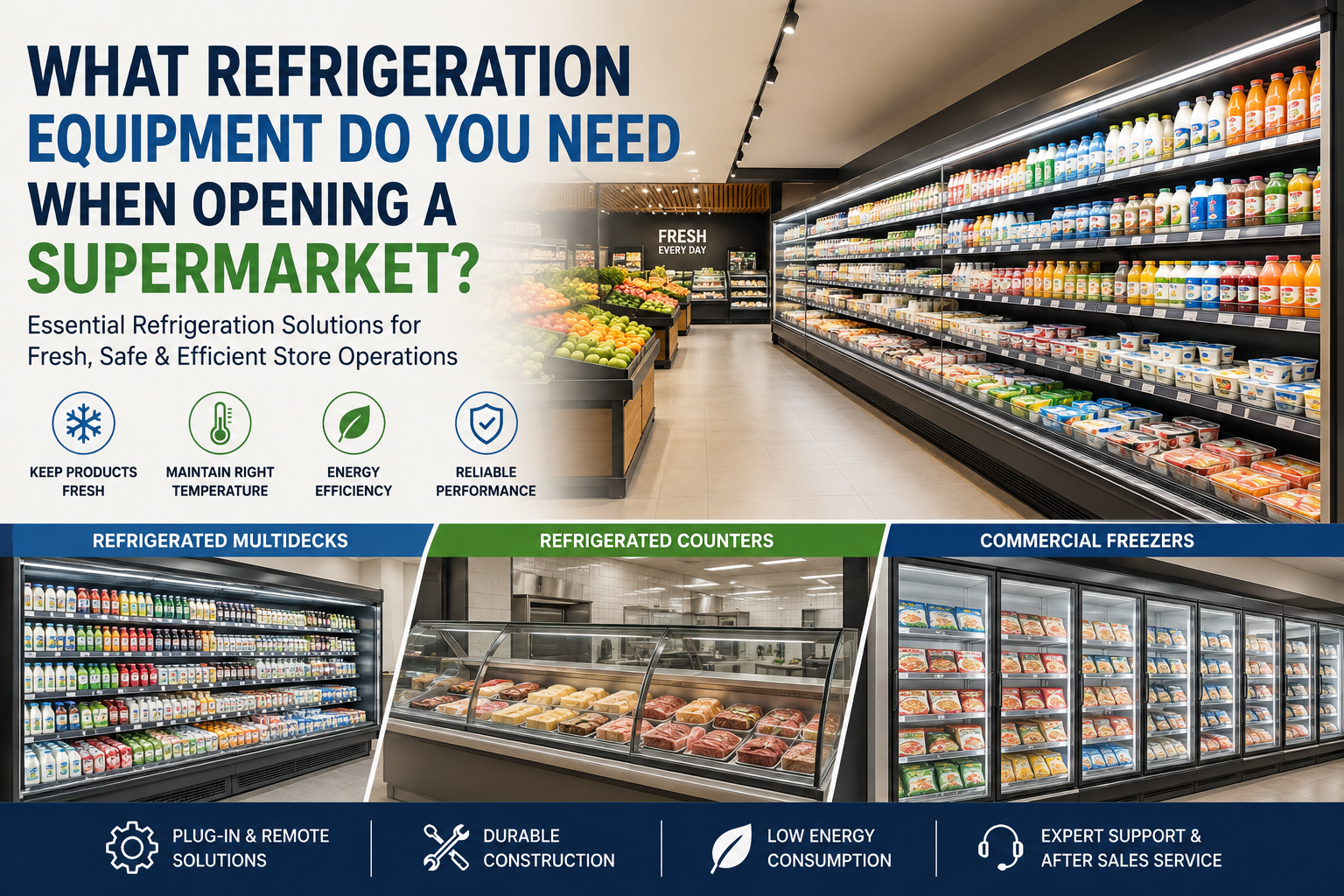
Most supermarkets need a combination of refrigerated display cabinets, multidecks, counters, and freezers. The exact combination depends on the products you sell and the size and layout of your store.
Here are the main types to consider.
1. Refrigerated Multideck Cabinets
Multideck refrigerated cabinets are one of the most useful solutions for supermarket product display.
Their vertical design provides several levels of display space, allowing supermarkets to present a large number of products while making them easy for customers to see and access.
They can be suitable for products such as:
- Milk and dairy products
- Yogurt
- Packaged foods
- Cold drinks
- Fresh products
- Ready-to-eat foods
If you are planning a supermarket with a large chilled-food section, refrigerated multideck cabinets can be an important part of your refrigeration plan.
For example, you can explore refrigerated multideck cabinets for plug-in applications.
2. Refrigerated Counters
A supermarket may also require refrigerated counters depending on the products being sold and the store’s layout.
Refrigerated counters combine product storage and working or display space, depending on their configuration. They can be particularly useful in food retail areas where employees need convenient access to refrigerated products.
Commercial refrigerated counters can be a practical choice when you need to combine refrigeration with an efficient use of working space.
You can view commercial refrigerated counters for plug-in applications.
3. Commercial Refrigerated Freezers
If your supermarket will sell frozen food, ice cream, frozen vegetables, meat, or other frozen products, you will need dedicated freezer equipment.
A refrigerated cabinet designed for chilled products should not simply be used for frozen products. Freezer equipment is designed for the lower temperatures required by frozen goods.
When selecting freezer equipment, consider:
- Required temperature range
- Product capacity
- Display space
- Store layout
- Energy consumption
- Accessibility for customers
- Ease of cleaning and maintenance
For a plug-in application, you can explore commercial refrigerated freezers.
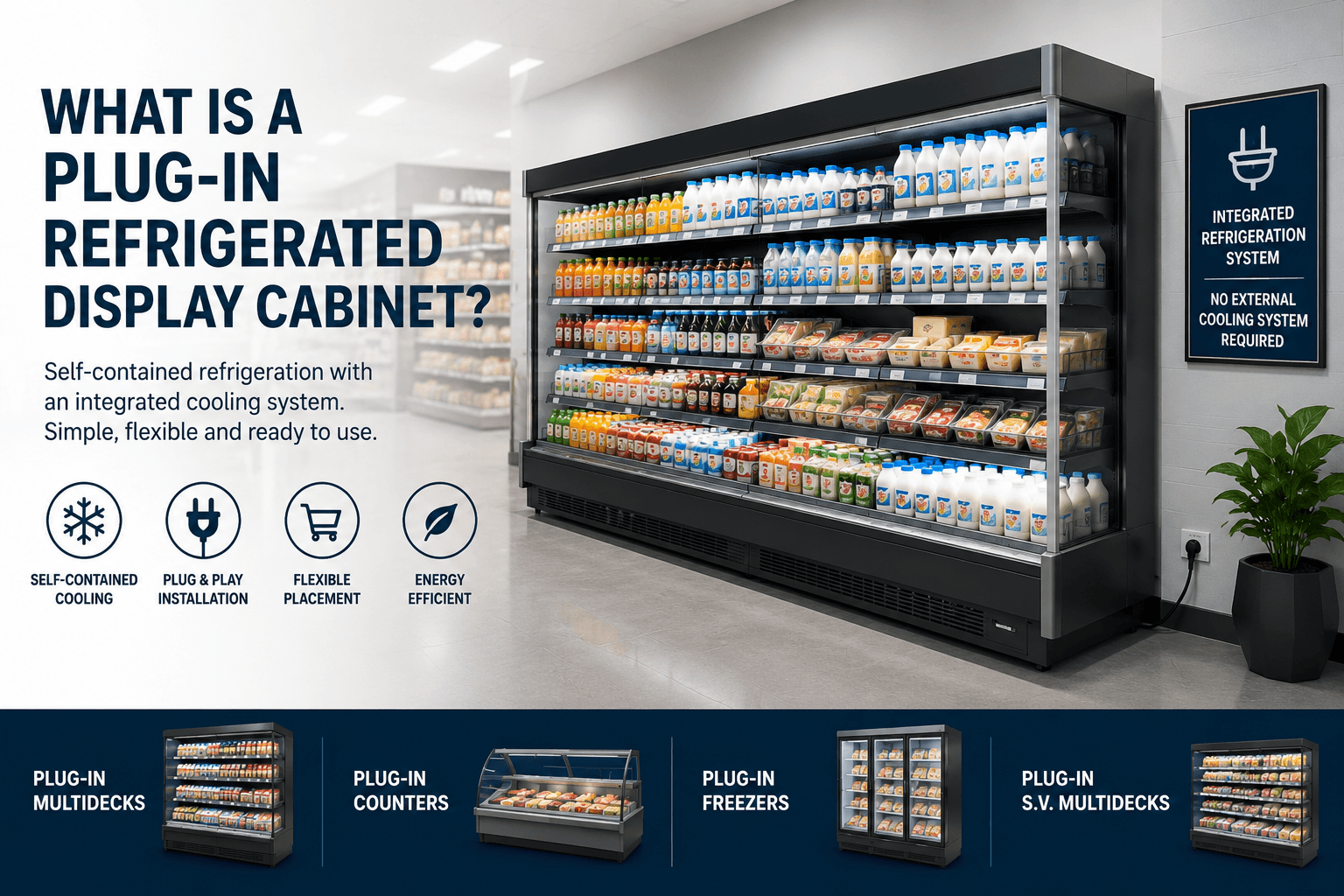
4. Plug-In Refrigeration Equipment
When planning a supermarket, one of the biggest decisions is whether to use plug-in or remote refrigeration equipment.
Plug-in equipment has its own integrated cooling unit and does not require connection to an external central refrigeration system. This can make it a practical option for certain stores and applications. İnanç Teknik describes its plug-in equipment as solutions designed particularly for smaller stores and applications where an external cooling system is not required.
Plug-in equipment can include:
- Multidecks
- Counters
- Freezers
- S.V. multidecks
The best choice depends on the size and design of your supermarket.
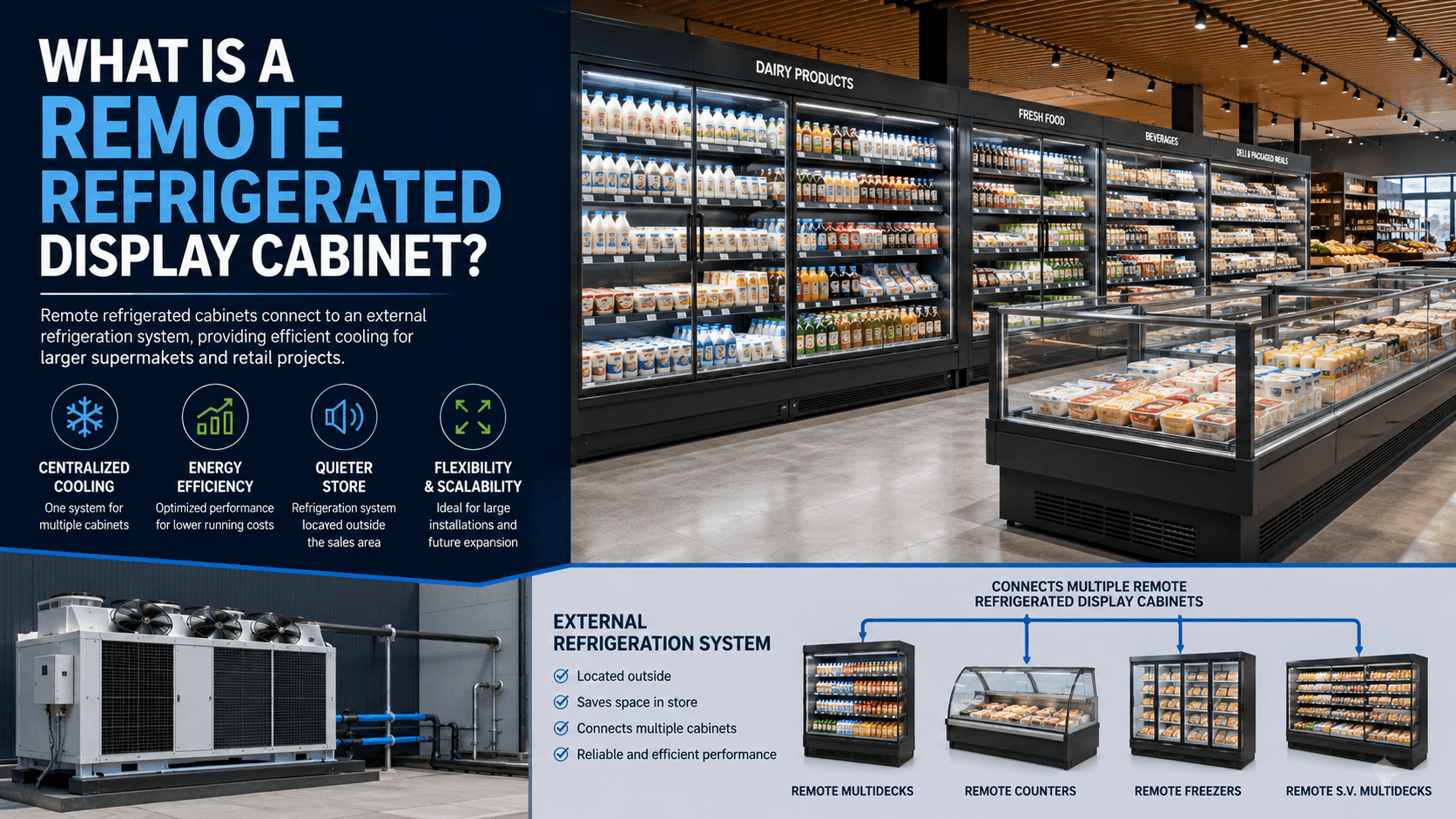
5. Remote Refrigeration Equipment
Remote refrigeration equipment is connected to an external refrigeration system rather than having its own integrated cooling unit. Unlike plug-in equipment, the refrigeration system is located separately from the display cabinet, making this approach particularly useful for larger supermarkets and commercial refrigeration projects.
This solution can be particularly suitable for larger supermarkets, hypermarkets, and projects where several refrigerated cabinets are connected to a central refrigeration system. İnanç Teknik specifically describes its remote equipment as suitable for supermarkets and superstores.
Remote refrigeration categories can include:
- Remote multidecks
- Remote counters
- Remote freezers
- Remote S.V. multidecks
For larger supermarket projects, remote systems can be considered as part of the overall refrigeration infrastructure.
For example, you can explore remote refrigerated multidecks when planning a larger chilled display area.
Plug-In or Remote Refrigeration: Which Is Better for a Supermarket?
There is no universal answer.
The right system depends on the size of the supermarket, the number of refrigeration units required, available infrastructure, store layout, installation requirements, and long-term operating plans.
Plug-in equipment may be suitable when:
- You need self-contained refrigeration units
- The store is relatively small or medium-sized
- You want simpler installation
- There is no central refrigeration system
- Individual cabinets need independent refrigeration
Remote equipment may be suitable when:
- You are opening a larger supermarket
- Multiple refrigeration cabinets are required
- A central refrigeration system is planned
- You want to integrate several cabinets into one refrigeration infrastructure
- The project requires a more centralized approach
The decision should be made during the supermarket design stage so that the refrigeration system works efficiently with the overall store layout.
6. Consider the Products Before Buying Equipment
One of the most important mistakes to avoid is choosing refrigeration equipment based only on appearance or price.
Start with your product list.
For example:
| Product category | Possible refrigeration solution |
|---|---|
| Dairy products | Refrigerated multideck |
| Chilled beverages | Refrigerated multideck |
| Packaged chilled foods | Refrigerated multideck |
| Fresh food | Suitable refrigerated display cabinet |
| Frozen foods | Commercial freezer |
| Products requiring refrigerated storage and work space | Refrigerated counter |
The exact equipment should always be selected according to the manufacturer’s specifications and the temperature requirements of the products.
7. Think About Your Supermarket Layout
Refrigeration equipment occupies valuable floor space, so the layout should be planned before purchasing cabinets.
Think about:
- Customer movement
- Aisle width
- Product visibility
- Staff access
- Restocking areas
- Checkout locations
- Door and entrance positions
- Available wall and floor space
A good refrigeration layout should make products easy to find while allowing customers and employees to move comfortably through the store.
For a new supermarket, it is often better to plan the refrigeration equipment together with the shelving and overall interior layout rather than choosing cabinets after the store design is complete.
8. Consider Energy Efficiency
Refrigeration equipment can operate for long periods every day, so energy consumption should be part of your purchasing decision.
Do not compare cabinets based only on their initial price.
Instead, consider the total cost of ownership, including:
Purchase cost + installation + electricity + maintenance + spare parts
Features such as effective insulation, efficient refrigeration components, appropriate lighting, and well-designed door systems can contribute to overall operating efficiency.
İnanç Teknik highlights energy efficiency as one of the characteristics of its refrigeration solutions and states that it develops products with a focus on low energy consumption.
9. Choose the Right Cabinet Capacity
The cabinet should provide enough space for your expected product volume without taking up unnecessary floor space.
A cabinet that is too small may require frequent restocking and create a crowded display.
A cabinet that is too large may waste valuable retail space and increase operating costs.
Before ordering equipment, calculate:
- Required display length
- Product volume
- Available floor space
- Number of product categories
- Expected customer demand
- Future expansion requirements
If you are opening a growing supermarket, it can also be useful to consider whether your refrigeration system can be expanded in the future.
10. Consider Glass Doors and Product Visibility
Product visibility is particularly important in a supermarket.
Customers should be able to see products easily without opening multiple doors or searching through poorly organized displays.
When comparing refrigerated display cabinets, consider:
- Glass visibility
- Door design
- Door durability
- Condensation control
- Lighting
- Insulation
- Ease of cleaning
A good display cabinet should balance product visibility, accessibility, energy performance, and attractive presentation.
İnanç Teknik states that it manufactures its own glass door and frame systems, allowing the company to maintain control over quality and offer durable and energy-efficient solutions.
11. Don’t Forget Maintenance
Refrigeration equipment is a long-term investment, so maintenance should be considered before you make a purchase.
Ask the manufacturer or supplier about:
- Recommended maintenance intervals
- Spare parts availability
- Technical support
- Cleaning requirements
- Installation support
- Service availability
- Warranty conditions
Regular maintenance can help identify problems before they become major equipment failures and can help maintain consistent refrigeration performance.
12. Work With an Experienced Commercial Refrigeration Manufacturer
A supermarket refrigeration project involves more than purchasing individual cabinets.
You need to think about the complete system: product requirements, cabinet types, refrigeration capacity, store layout, energy consumption, installation, maintenance, and future expansion.
Working with an experienced manufacturer can make this process easier.
İnanç Teknik offers both plug-in and remote refrigeration equipment, including multidecks, freezers, counters, and S.V. multidecks. The company also states that it has in-house manufacturing capabilities for evaporators, glass doors and frames, and powder coating.
For a supermarket project, discussing your requirements with the manufacturer before selecting equipment can help ensure that the refrigeration solutions are appropriate for the application.
Supermarket Refrigeration Equipment Checklist
Before ordering your refrigeration equipment, consider the following:
- What chilled products will you sell?
- What frozen products will you sell?
- How much display space do you need?
- How much floor space is available?
- Do you need multidecks?
- Do you need refrigerated counters?
- Do you need commercial freezers?
- Is plug-in or remote refrigeration more suitable?
- What temperature ranges are required?
- How important is energy efficiency?
- How will the equipment fit into the store layout?
- What maintenance and technical support will you need?
- Can the system accommodate future expansion?
Final Thoughts
When opening a supermarket, refrigeration should be one of the first areas you plan because it directly affects product quality, presentation, store layout, energy consumption, and daily operations.
For most supermarkets, the refrigeration setup will involve a combination of equipment rather than one type of refrigerator. Refrigerated multidecks can be useful for chilled product displays, refrigerated counters can support specific retail and food-service applications, and commercial freezers are essential for frozen products.
You also need to decide whether a plug-in or remote refrigeration system is more appropriate for your supermarket.
The best approach is to start with your product range and store layout, determine your refrigeration requirements, and then select equipment based on capacity, temperature performance, energy efficiency, durability, maintenance, and long-term operating costs.
Choosing the right refrigeration equipment from the beginning can help create a more efficient, organized, and reliable supermarket.
Frequently Asked Questions About Supermarket Refrigeration
What refrigeration equipment is needed when opening a supermarket?
Most supermarkets need a combination of refrigerated multidecks, refrigerated counters, commercial freezers, and other display refrigeration equipment. The exact setup depends on the products sold, store size, available space, and refrigeration system.
What type of refrigerator is best for a supermarket?
There is no single best refrigerator for every supermarket. Refrigerated multidecks are commonly suitable for displaying chilled products, while refrigerated counters and commercial freezers are better suited to specific product and storage requirements.
Are refrigerated multidecks necessary for supermarkets?
Refrigerated multidecks can be very useful in supermarkets because their vertical design provides substantial display space while keeping chilled products visible and accessible to customers. They are commonly used for dairy products, beverages, packaged foods, and other chilled products.
What is the difference between plug-in and remote supermarket refrigeration?
Plug-in refrigeration equipment has an integrated refrigeration system, while remote equipment connects to an external or central refrigeration system. Plug-in units can be practical for smaller applications, whereas remote refrigeration can be suitable for larger supermarket projects with multiple refrigerated cabinets.
Does a supermarket need commercial refrigerated freezers?
Yes, if the supermarket sells frozen foods, ice cream, frozen vegetables, or other frozen products, dedicated commercial freezer equipment is required. Freezers are designed to maintain the lower temperatures needed for frozen products.
How many refrigerated display cabinets does a supermarket need?
The number depends on the supermarket’s size, product range, expected sales volume, and available display space. A proper refrigeration plan should consider both current requirements and potential future expansion.
How do I choose the right refrigeration equipment for a new supermarket?
Start by identifying the products you will sell and their temperature requirements. Then consider cabinet type, capacity, store layout, available space, energy efficiency, plug-in or remote refrigeration, maintenance requirements, and your long-term operating budget.
Is energy efficiency important when choosing supermarket refrigeration equipment?
Yes. Refrigeration equipment can operate for many hours each day, so energy consumption can have a significant impact on operating costs. Efficient insulation, refrigeration components, lighting, and door systems can help improve overall energy performance.
What should I consider when planning supermarket refrigeration?
Important factors include product type, required temperatures, cabinet capacity, store layout, floor space, customer access, energy consumption, refrigeration system, installation, maintenance, and technical support.
Why should I work with an experienced commercial refrigeration manufacturer?
An experienced manufacturer can help you select equipment based on your store’s products, size, layout, and refrigeration requirements. They can also provide guidance on installation, technical specifications, maintenance, and suitable plug-in or remote solutions.