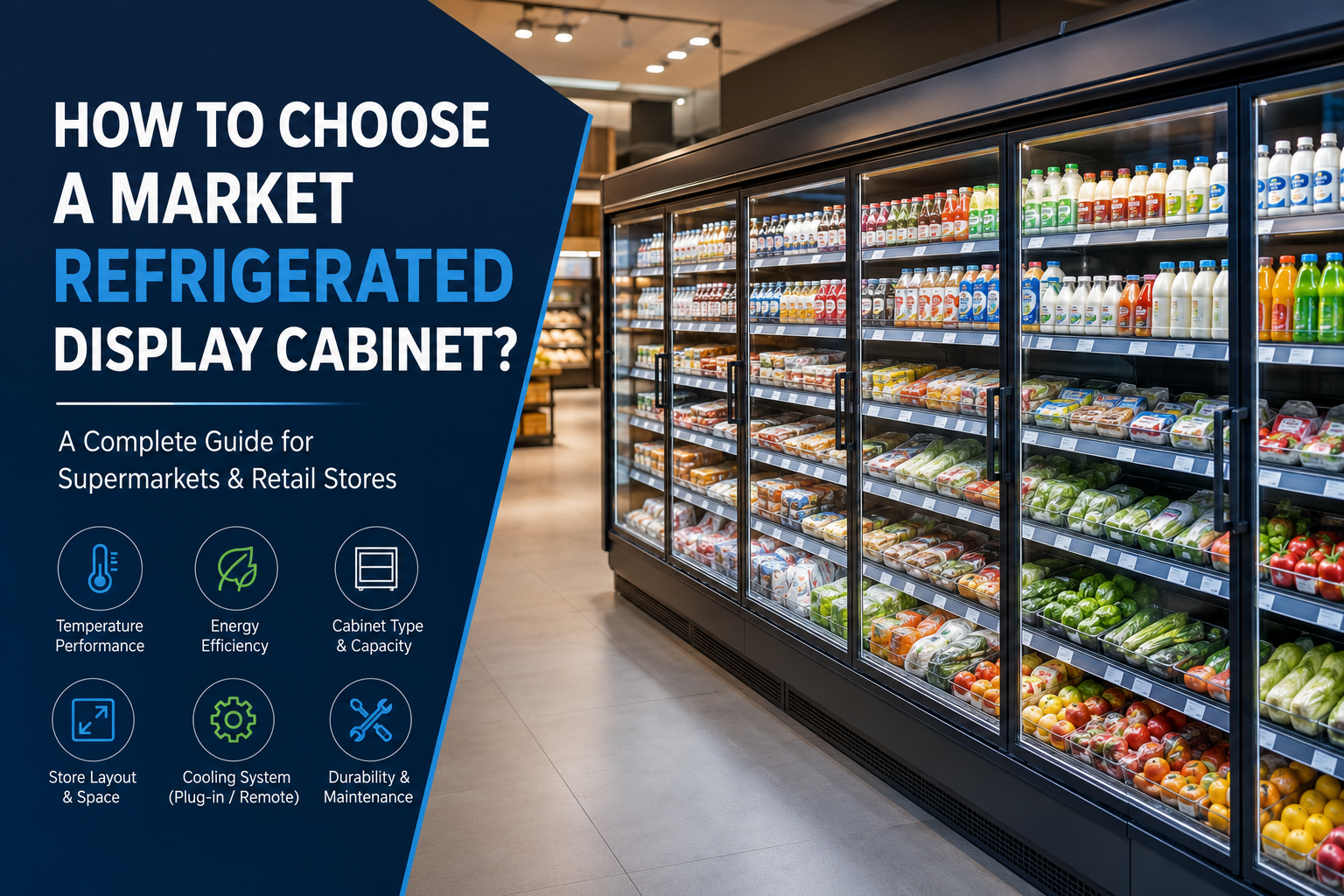
Choosing the right refrigerated display cabinet is an important decision for supermarkets, grocery stores, convenience stores, food retailers, and other businesses that need to keep chilled products fresh while presenting them attractively to customers.
A refrigerated display cabinet does more than keep food cold. The right cabinet can improve product visibility, maintain stable temperatures, reduce energy consumption, make better use of floor space, and support a more organized shopping experience.
But with different cabinet types, sizes, cooling systems, configurations, and refrigeration options available, choosing the right model can be challenging.
So, what should you consider before buying a refrigerated display cabinet for your market?
This guide explains the key factors to help you make a practical and informed decision.
Table of Contents
1. Start With the Products You Need to Display
The first step is to identify exactly what you plan to store and display.
Different products have different refrigeration requirements. For example, dairy products, packaged foods, beverages, fresh meat, prepared foods, and frozen products may require different temperature conditions and cabinet configurations.
Before choosing a cabinet, consider:
- What products will be displayed?
- What temperature range do those products require?
- How much stock needs to be displayed at one time?
- How frequently will products be replenished?
- Will customers have direct access to the products?
- Do you need chilled or frozen storage?
Choosing the cabinet based on the products rather than appearance alone helps ensure reliable product protection and better long-term performance.
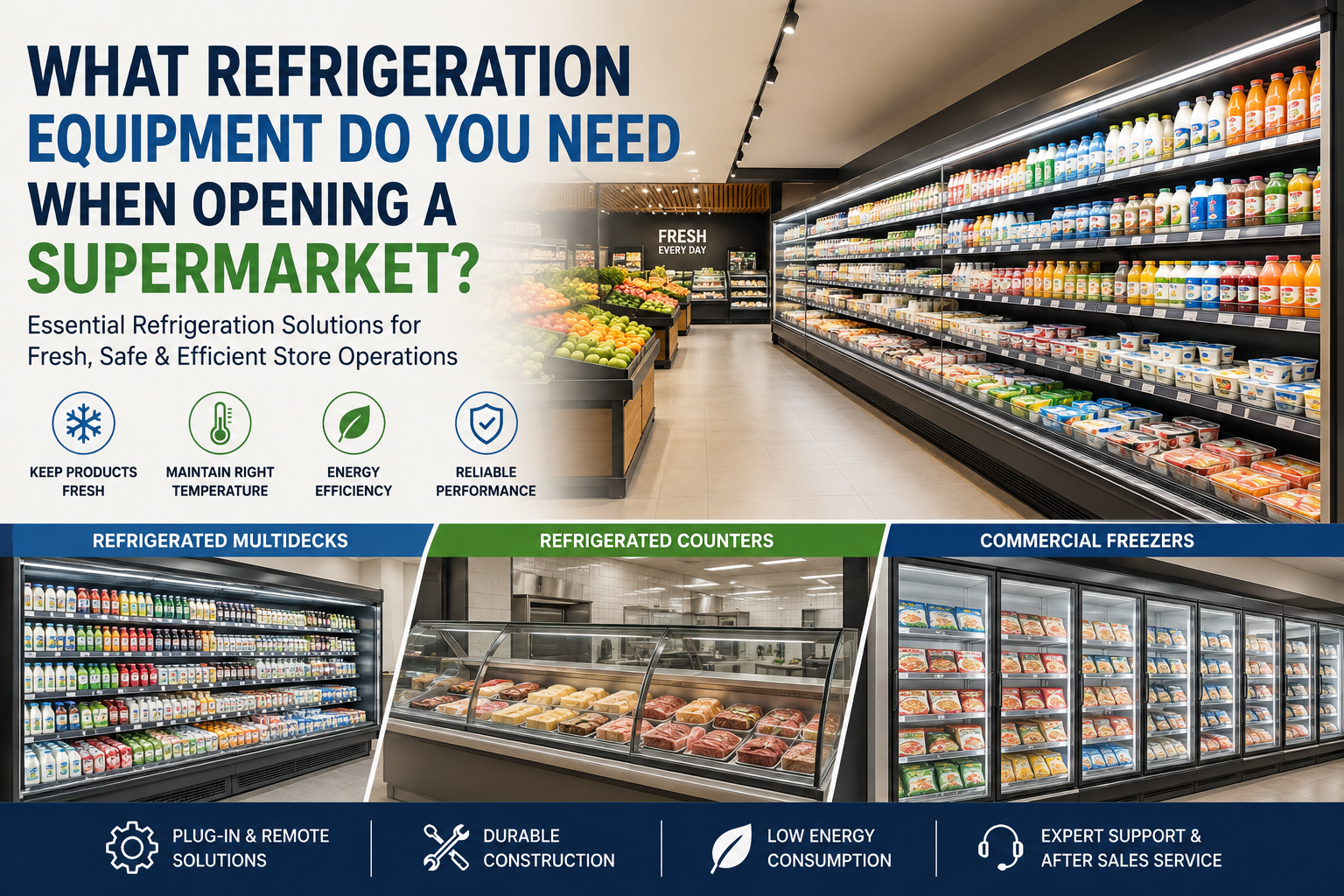
2. Choose the Right Type of Refrigerated Display Cabinet
Refrigerated display cabinets are available in several configurations. The best option depends on your store layout, product range, available space, and refrigeration requirements.
Multideck Refrigerated Display Cabinets
Multideck cabinets are commonly used in supermarkets and retail stores because they provide a large vertical display area.
They are suitable for displaying products such as:
- Dairy products
- Packaged foods
- Drinks
- Fresh products
- Ready-to-eat foods
Their vertical design allows retailers to display a wide range of products while making them easy for customers to see and access.
For larger retail environments, refrigerated multideck cabinets can be an effective way to maximize display space.
Refrigerated Counters
Commercial refrigerated counters can be useful when both storage and product presentation are important.
They can provide refrigerated space underneath while offering a working or display area above, depending on the configuration.
This type of equipment can be particularly useful in food retail environments where staff need convenient access to refrigerated products.
Refrigerated Freezers
If your business sells frozen products, a standard chilled display cabinet may not be sufficient, and commercial refrigerated freezers may be a better solution.
Frozen-food display equipment is designed for lower-temperature applications and can be used for products such as frozen foods, ice cream, and other frozen goods.
The key is to select equipment specifically designed for the required temperature conditions rather than trying to use one cabinet for every product category.
3. Decide Between Plug-In and Remote Refrigeration
One of the most important decisions is whether you need a plug-in or remote refrigerated display cabinet.
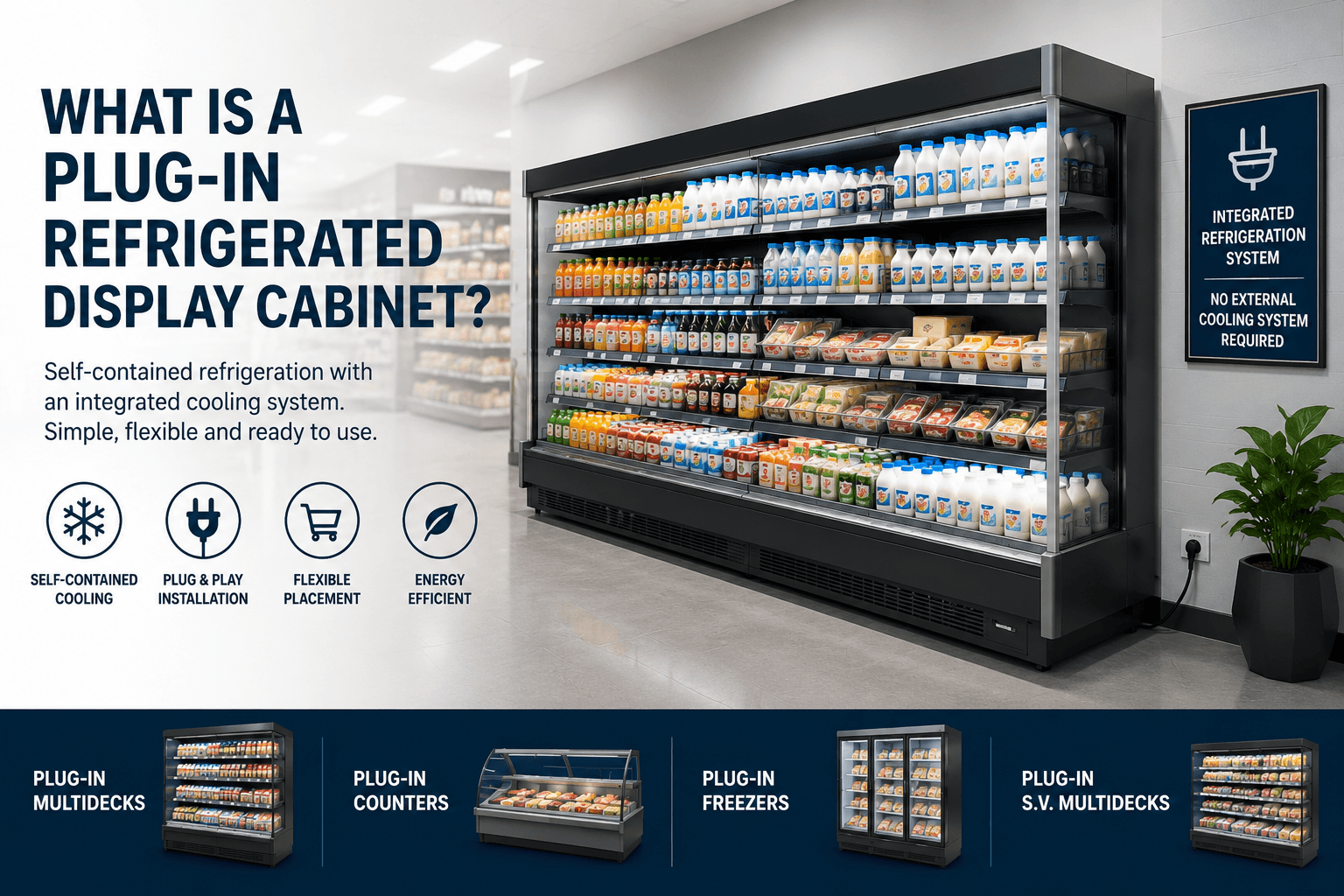
What Is a Plug-In Refrigerated Cabinet?
A plug-in unit has its own integrated refrigeration system. It can generally be installed without connecting the cabinet to a separate central refrigeration system.
This can make plug-in equipment a practical choice for smaller stores, individual retail areas, or businesses looking for a relatively straightforward installation.
İnanç Teknik offers plug-in equipment across categories including multidecks, counters, freezers and S.V. multidecks.
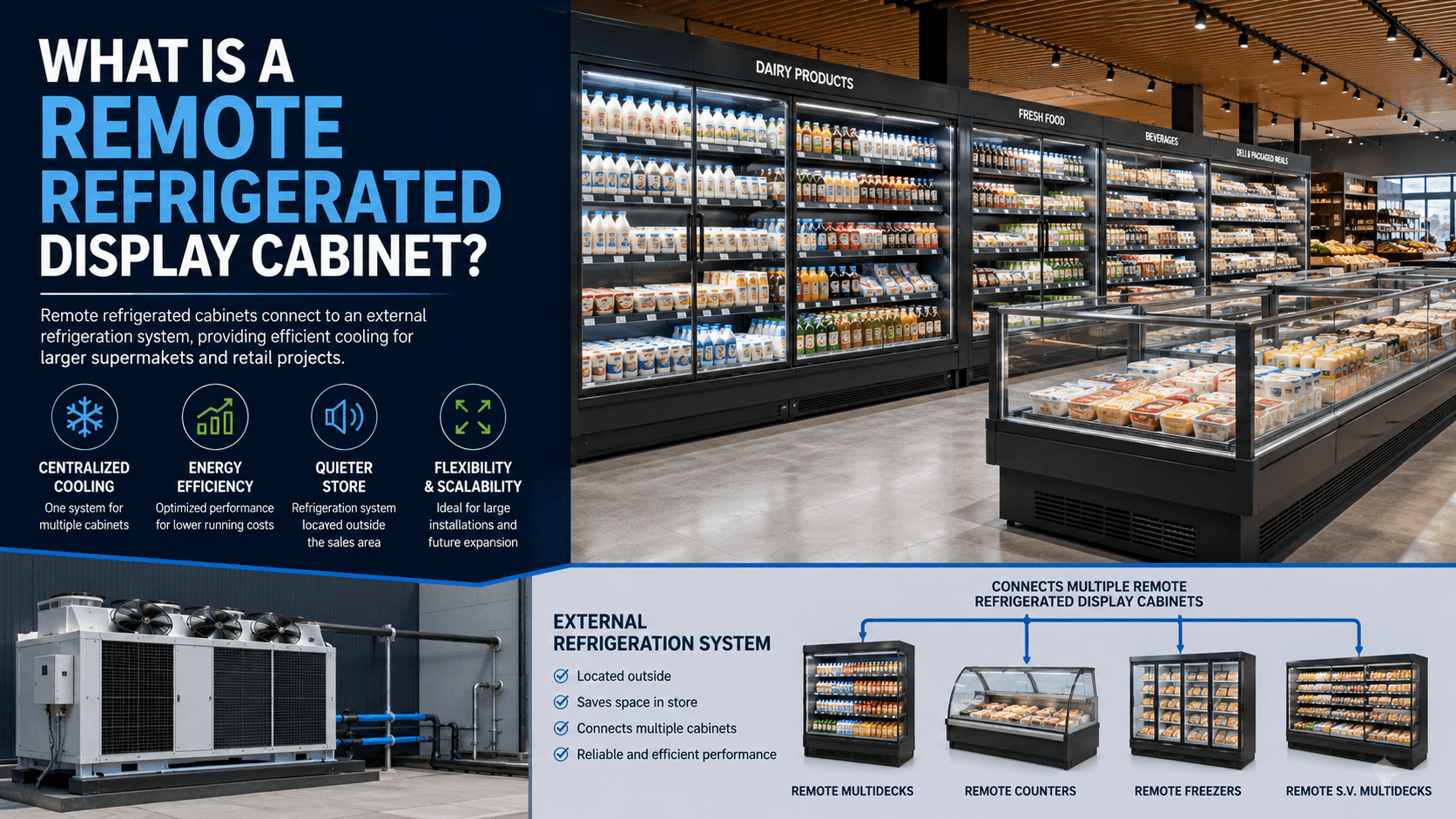
What Is a Remote Refrigerated Cabinet?
Remote equipment is designed to connect to an external refrigeration system.
This type of solution can be particularly suitable for larger supermarkets, hypermarkets, and retail projects where multiple refrigerated cabinets are connected to a central refrigeration system. For example, remote refrigerated multidecks can be used when a larger refrigerated display area is required.
Remote systems can provide greater flexibility for larger installations, but the overall project requires careful planning of the refrigeration infrastructure. If you want to learn more about how these systems work, their advantages, and the different types available, see our guide to remote refrigerated display cabinets.
İnanç Teknik provides both remote and plug-in refrigeration solutions for different retail requirements.
Plug-In vs. Remote: Which One Should You Choose?
There is no single answer for every business.
A plug-in cabinet may be more suitable when you need a self-contained solution with a simpler installation approach.
A remote cabinet may be more appropriate for a larger retail project where multiple cabinets are integrated into a central refrigeration system.
The right choice depends on your store size, layout, refrigeration infrastructure, installation requirements, and long-term operating plans.
4. Check Temperature Performance
Temperature stability is one of the most important factors when choosing a refrigerated display cabinet.
A cabinet needs to maintain the appropriate conditions for the products it is designed to hold. Temperature performance can also be affected by factors such as ambient temperature, humidity, door opening frequency, cabinet loading, and airflow.
When comparing models, ask the manufacturer about:
- Intended temperature range
- Temperature class
- Cooling method
- Air circulation
- Defrost system
- Operating conditions
- Recommended product categories
International testing and classification standards for refrigerated display cabinets take temperature performance and climate conditions into account, so specifications should be evaluated according to the environment in which the cabinet will operate.
Do not choose a cabinet simply because it has a large display area. The refrigeration system must also be appropriate for the products and operating environment.
5. Consider Energy Efficiency
A refrigerated display cabinet can operate for long hours every day, so energy consumption can have a significant effect on operating costs.
When comparing cabinets, look beyond the initial purchase price.
Consider features such as:
- Energy-efficient refrigeration components
- Efficient fan motors
- LED lighting
- Well-insulated construction
- Efficient glass doors
- Effective defrost systems
- Appropriate refrigeration capacity
Energy performance can vary considerably between cabinets of similar size, which makes efficiency an important part of the purchasing decision.
A cabinet that costs slightly more initially may provide better value over its lifetime if it uses less energy and requires less maintenance.
6. Pay Attention to Glass Doors and Product Visibility
The display area is an important part of a refrigerated cabinet because customers need to see products clearly.
Glass doors can help maintain product visibility while reducing exposure to the surrounding store environment.
The design of the glass and door system can also affect energy performance and the overall appearance of the cabinet.
For example, İnanç Teknik manufactures its own glass door and frame systems, with a focus on durability, energy efficiency, and appearance.
When selecting a cabinet, consider:
- Glass visibility
- Door configuration
- Ease of opening
- Door durability
- Insulation
- Condensation control
- Cleaning requirements
A well-designed display cabinet should make products easy to see without creating unnecessary operational problems for staff.
7. Choose the Correct Size and Capacity
Bigger is not always better.
A cabinet that is too small may lead to overcrowding, frequent replenishment, and poor product presentation. On the other hand, a cabinet that is significantly larger than necessary can take up valuable floor space and increase operating costs.
Before purchasing, measure:
- Available floor space
- Ceiling height
- Aisle width
- Required display length
- Product volume
- Storage requirements
- Customer traffic areas
Also consider future expansion. If your business is expected to grow, modular refrigeration equipment may provide greater flexibility.
8. Think About Store Layout and Customer Flow
The location of a refrigerated display cabinet can affect both sales and the customer experience.
Consider how customers move through your store and where refrigerated products are normally purchased.
A well-planned display should:
- Provide easy customer access
- Keep aisles clear
- Make products easy to find
- Provide good visibility
- Allow staff to restock efficiently
- Fit naturally into the overall store layout
For larger projects, refrigeration equipment should be considered as part of the store design rather than as an isolated purchase.
9. Look at Construction Quality and Materials
Commercial refrigeration equipment needs to withstand continuous use.
Cabinet construction, insulation, shelving, glass, doors, frames, coatings, and refrigeration components can all influence durability and service life.
Ask the manufacturer about:
- Construction materials
- Insulation quality
- Glass and frame construction
- Corrosion resistance
- Component quality
- Manufacturing standards
- Availability of spare parts
- Maintenance requirements
İnanç Teknik states that it manufactures key components such as evaporators, glass doors and frames, and uses its own powder-coating technology as part of its manufacturing process.
These manufacturing capabilities can be relevant when evaluating suppliers for long-term commercial refrigeration projects.
10. Consider the Refrigerant
The refrigerant used by a refrigeration system is another factor worth discussing with the manufacturer.
Modern commercial refrigeration projects may use different refrigerants depending on the equipment design, application, environmental requirements, and project specifications.
For example, İnanç Teknik states that its in-house evaporator manufacturing supports systems using propane, HFC and CO₂ refrigerants.
Rather than selecting a refrigerant based on a general trend, ask the manufacturer which option is appropriate for your equipment, store environment, local regulations, and refrigeration system.
11. Don’t Forget Maintenance and After-Sales Support
Buying a refrigerated display cabinet is not the end of the investment.
Regular cleaning, inspection, servicing, and proper operation can help maintain refrigeration performance and extend equipment life.
Before purchasing, ask:
- Who provides technical support?
- Are spare parts available?
- What maintenance is recommended?
- How quickly can service be provided?
- Does the manufacturer provide installation support?
- Is the equipment designed for easy cleaning and servicing?
A reliable supplier should be able to support the equipment beyond the initial sale.
12. Compare Total Cost, Not Just Purchase Price
One of the most common mistakes when buying commercial refrigeration equipment is focusing only on the initial price.
The actual cost of ownership can include:
Purchase price + installation + electricity + maintenance + repairs + replacement parts
A cheaper cabinet may not necessarily be the more economical option if it consumes more electricity or requires frequent maintenance.
Instead, compare the expected long-term operating cost of each option.
13. Work With an Experienced Refrigeration Manufacturer
The right refrigerated display cabinet depends on many variables, including product type, store size, ambient conditions, display requirements, refrigeration infrastructure, energy consumption, and budget.
That is why working directly with an experienced manufacturer can be valuable.
İnanç Teknik develops both plug-in and remote commercial refrigeration solutions and offers product categories including multidecks, counters, freezers and S.V. multidecks. The company also highlights in-house manufacturing capabilities and customer-oriented project support.
For a new supermarket or retail refrigeration project, discussing your requirements with the manufacturer before selecting a cabinet can help you avoid choosing equipment that does not match your application.
A Quick Checklist Before Buying a Refrigerated Display Cabinet
Before making your final decision, make sure you can answer these questions:
- What products will the cabinet display?
- What temperature conditions are required?
- How much display space do you need?
- How much floor space is available?
- Do you need a plug-in or remote system?
- What is the expected energy consumption?
- What type of glass and doors are required?
- Is the cabinet easy to clean and maintain?
- Are spare parts and technical support available?
- Does the manufacturer have experience with similar projects?
- Does the equipment fit your current and future store plans?
Final Thoughts
Choosing a refrigerated display cabinet for your market is about much more than finding a cabinet that looks good or has the lowest purchase price.
The best solution should match your products, temperature requirements, store layout, available space, refrigeration system, energy goals, and long-term operating needs.
Start by identifying your products and refrigeration requirements. Then compare cabinet types, cooling systems, dimensions, energy performance, construction quality, maintenance requirements, and supplier support.
For larger supermarkets and commercial refrigeration projects, it is also worth discussing the complete project with an experienced refrigeration manufacturer before making a final decision.
With the right planning, a well-selected refrigerated display cabinet can help protect product quality, improve product presentation, make better use of retail space, and support efficient day-to-day operations.
FAQs
What is a refrigerated display cabinet?
A refrigerated display cabinet is commercial refrigeration equipment designed to keep chilled products at suitable temperatures while displaying them clearly to customers. They are commonly used in supermarkets, grocery stores, convenience stores, and other food retail businesses.
How do I choose the right refrigerated display cabinet for my market?
Consider the products you need to display, required temperature range, available floor space, display capacity, energy efficiency, refrigeration system, cabinet dimensions, and maintenance requirements. Your store layout and expected customer traffic should also influence your decision.
What types of refrigerated display cabinets are available?
Common options include multideck refrigerated cabinets, refrigerated counters, display freezers, plug-in cabinets, and remote refrigerated cabinets. The best option depends on the products, store size, and refrigeration requirements.
What is the difference between plug-in and remote refrigerated cabinets?
A plug-in refrigerated cabinet has an integrated refrigeration system, making it suitable for applications where a self-contained solution is preferred. A remote cabinet connects to an external or central refrigeration system and is often used in larger supermarkets and commercial refrigeration projects.
Are refrigerated multideck cabinets suitable for supermarkets?
Yes. Refrigerated multideck cabinets are widely suited to supermarkets because their vertical design provides substantial product display space while allowing customers easy access to chilled products such as dairy, beverages, packaged foods, and ready-to-eat products.
What temperature should a refrigerated display cabinet maintain?
The appropriate temperature depends on the products being stored and the cabinet’s intended application. Always check the manufacturer’s specified temperature range and ensure it is suitable for the products you plan to display.
Are energy-efficient refrigerated display cabinets worth the investment?
Yes. Since commercial refrigerated cabinets may operate for long periods every day, energy efficiency can have a significant effect on operating costs. Features such as efficient refrigeration components, LED lighting, good insulation, and suitable door systems can help reduce energy consumption.
What should I consider when choosing the size of a refrigerated display cabinet?
Measure the available floor space, aisle width, ceiling height, required display length, and expected product volume. The cabinet should provide enough capacity without unnecessarily taking up valuable retail space.
How important is the manufacturer when buying commercial refrigeration equipment?
The manufacturer is important because equipment performance depends not only on the cabinet design but also on component quality, manufacturing standards, technical support, spare parts, installation, and after-sales service. Choosing an experienced manufacturer can provide better long-term support.
How often does a refrigerated display cabinet need maintenance?
Maintenance requirements depend on the cabinet type, operating conditions, and manufacturer’s recommendations. Regular cleaning, inspection, and servicing can help maintain cooling performance, energy efficiency, hygiene, and equipment lifespan.