Refrigeration is one of the most important systems in a supermarket, but it can also be a significant source of energy consumption.
Refrigerated multidecks, counters, freezers, and other commercial refrigeration equipment may operate for long periods every day. Small inefficiencies can therefore become significant operating costs over time.
The good news is that energy consumption is not determined by the refrigeration cabinet alone. Equipment selection, store conditions, product loading, maintenance, temperature settings, door usage, lighting, and the overall refrigeration system can all influence energy performance.
So, how can a supermarket reduce refrigeration energy consumption without compromising product quality?
This guide explains practical ways to improve the energy efficiency of supermarket refrigeration.
Table of Contents
Why Is Energy Efficiency Important in Supermarket Refrigeration?
Commercial refrigeration equipment often operates continuously or for long periods.
This means energy efficiency can have a direct effect on a supermarket’s operating costs.
Improving refrigeration efficiency can help businesses:
- Reduce unnecessary electricity consumption
- Control operating costs
- Maintain more consistent product temperatures
- Reduce unnecessary stress on refrigeration components
- Support longer equipment performance
- Improve overall store efficiency
Energy efficiency should therefore be considered when designing a new supermarket as well as when upgrading an existing refrigeration system.
1. Choose the Right Refrigeration Equipment
One of the most important decisions is selecting equipment that matches the store’s actual requirements.
A cabinet that is too large for the application may use more resources than necessary, while a cabinet that is too small may be overloaded or require frequent restocking.
Before purchasing equipment, consider:
- Product type
- Required temperature
- Display capacity
- Store size
- Available floor space
- Expected product volume
- Operating conditions
- Future expansion
The objective is to select refrigeration equipment that provides the required performance without unnecessary capacity.
2. Choose the Right Refrigeration System
Supermarkets can use different refrigeration configurations depending on their size and requirements.
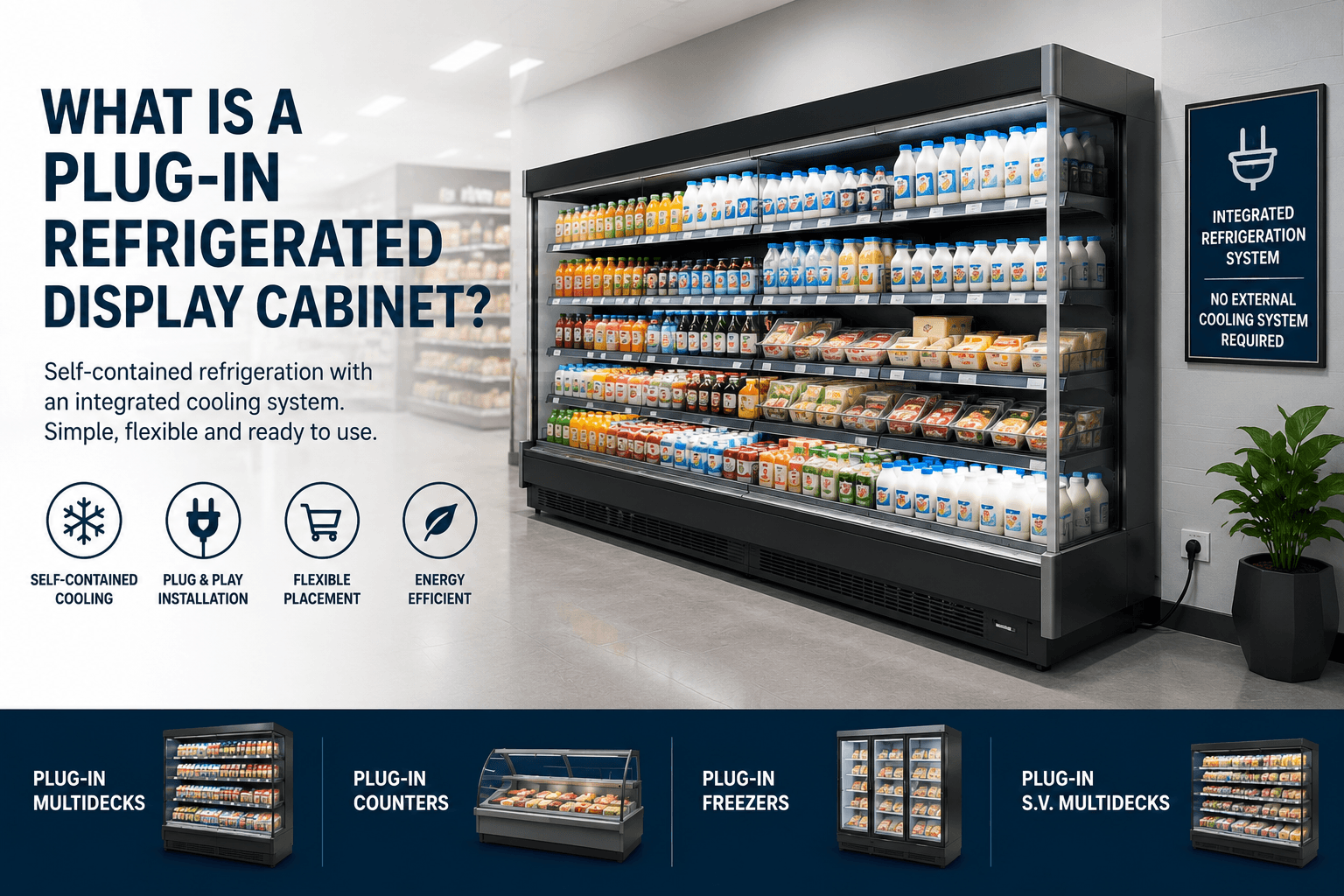
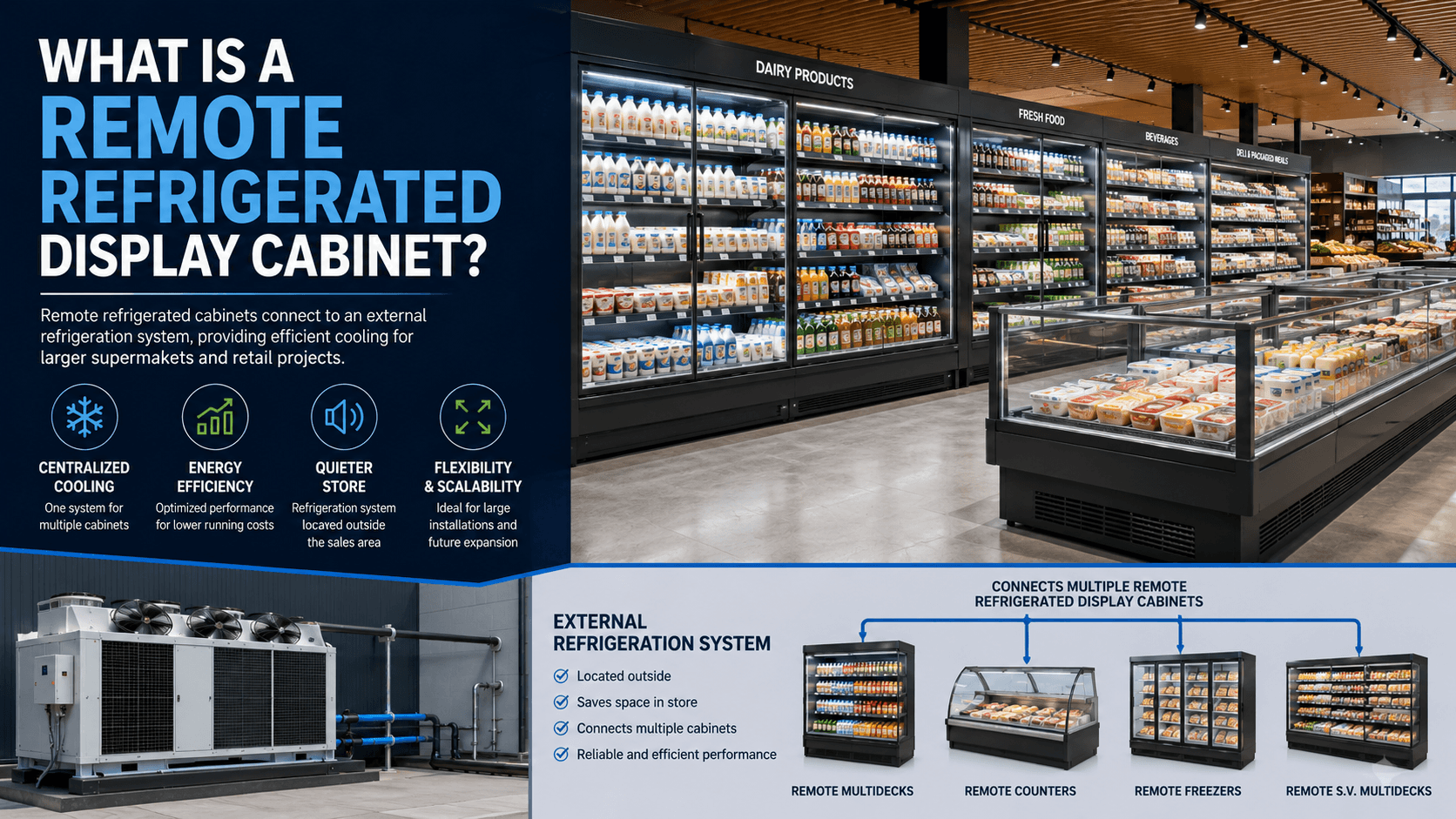
Two common approaches are plug-in and remote refrigeration.
Plug-in equipment has an integrated refrigeration system and can be suitable for individual or smaller applications.
Remote refrigeration equipment connects to an external refrigeration system and can be considered for larger projects where multiple cabinets form part of a centralized refrigeration infrastructure.
The most energy-efficient choice depends on the complete project.
There is no universal rule that says remote refrigeration or plug-in refrigeration will always consume less energy. System design, equipment efficiency, operating conditions, installation, and maintenance all matter.
3. Keep Condensers and Airflow Areas Clean
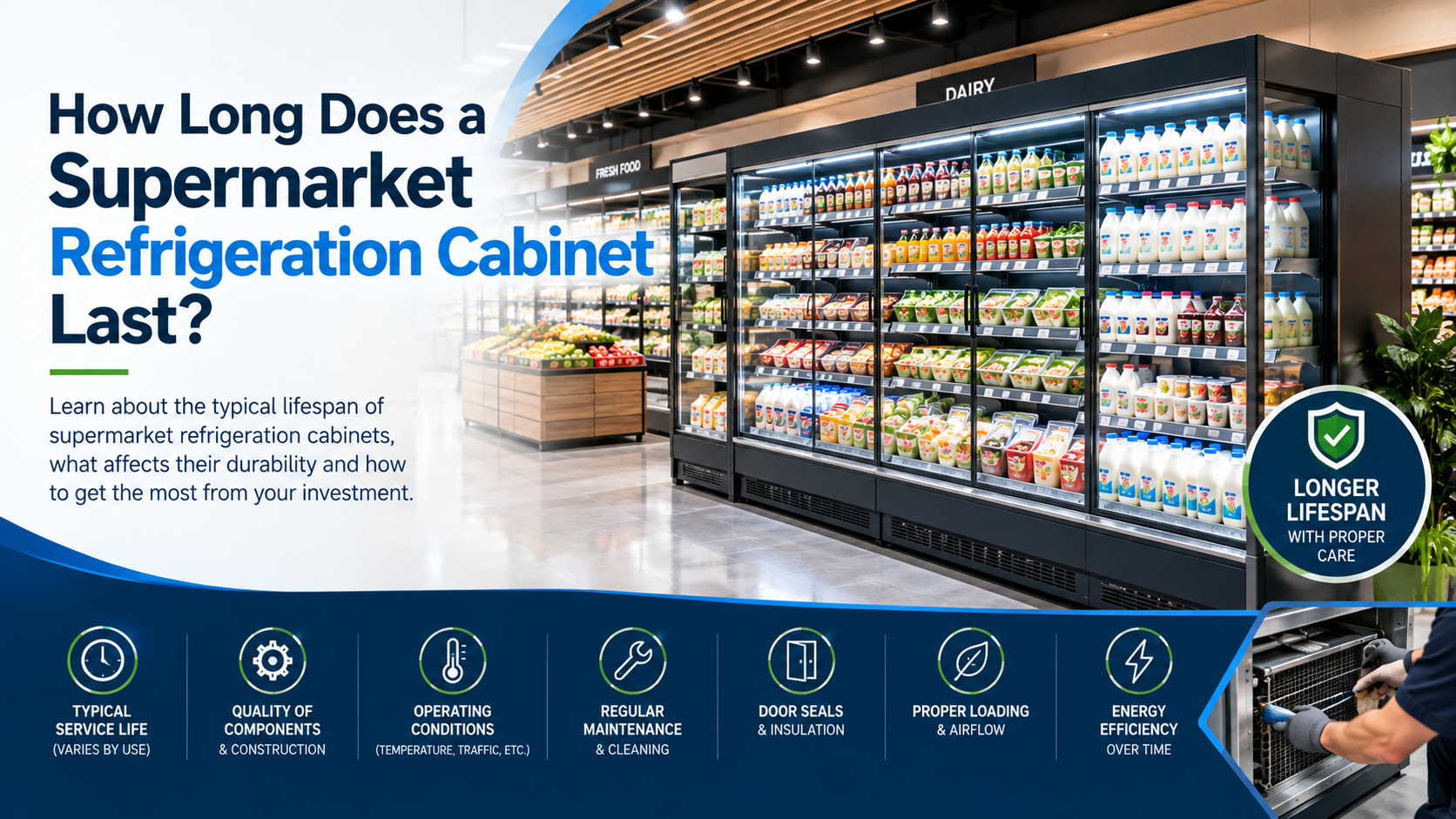
Airflow is essential for refrigeration equipment.
When dust and dirt accumulate around components, heat transfer and airflow can be affected. The refrigeration system may then need to work harder to maintain the required temperature.
Regular maintenance should include inspection and cleaning of relevant refrigeration components according to the manufacturer’s recommendations.
Keeping equipment clean can help maintain performance and reduce unnecessary operating stress.
4. Do Not Block Air Outlets
Refrigerated display cabinets rely on proper air circulation.
Products should not be placed in a way that blocks air outlets or interferes with the designed airflow pattern.
Poor product loading can result in:
- Uneven temperatures
- Reduced cooling performance
- Longer operating cycles
- Product quality problems
- Increased energy consumption
Employees should be trained to load products within the cabinet’s recommended loading area.
5. Avoid Overloading Refrigerated Cabinets
More products do not always mean better use of display space.
Overloading a cabinet can restrict airflow and prevent the refrigeration system from operating as designed.
Instead, maintain an organized display with sufficient airflow around the products.
This can also improve product visibility and make the shopping experience easier for customers.
6. Check Door Seals Regularly
Glass doors and seals are important parts of refrigerated cabinets.
A damaged or poorly sealing door can allow warm air to enter the refrigerated space.
The refrigeration system may then need to operate for longer periods to restore the target temperature.
Inspect door seals regularly for:
- Cracks
- Gaps
- Deformation
- Loose sections
- Visible damage
Replacing a damaged gasket can help maintain the cabinet’s intended refrigeration performance.
7. Minimize Unnecessary Door Opening
Every time a refrigerated door is opened, warmer ambient air can enter the cabinet.
In busy supermarkets, frequent door opening can therefore influence refrigeration performance.
Businesses can reduce unnecessary door opening by:
- Organizing products clearly
- Keeping popular products easy to find
- Training staff to close doors promptly
- Avoiding leaving doors open during restocking
- Checking door closing mechanisms
Small operational changes can make a difference when repeated throughout the day.
8. Maintain the Correct Temperature
Running refrigeration equipment colder than necessary can increase energy consumption.
However, reducing the temperature too much can also be inappropriate for some products.
The correct approach is to maintain the temperature required for the specific product and equipment rather than simply choosing the lowest possible temperature.
Always follow the manufacturer’s specifications and applicable food-safety requirements when setting operating temperatures.
9. Maintain Refrigeration Equipment Regularly
Preventive maintenance can help keep refrigeration systems operating efficiently.
A maintenance program may include:
- Temperature checks
- Condenser inspection
- Evaporator inspection
- Fan inspection
- Door and gasket inspection
- Electrical checks
- Refrigeration system inspection
- Cleaning
- Control-system checks
Maintenance requirements vary by equipment, so the manufacturer’s instructions should always be followed.
10. Pay Attention to Store Temperature
The environment around refrigeration equipment can affect its performance.
If refrigerated cabinets are exposed to excessive heat, direct sunlight, or poor airflow, they may have to work harder to maintain their target temperature.
Where possible:
- Avoid placing cabinets near strong heat sources
- Maintain adequate ventilation
- Follow installation clearances
- Avoid blocking ventilation areas
- Consider ambient conditions during store planning
The surrounding store environment should be considered when designing the refrigeration layout.
11. Use Efficient Lighting
Lighting inside refrigerated display cabinets contributes to the equipment’s overall energy consumption.
Modern efficient lighting can provide good product visibility while helping control energy use.
Lighting should also be selected according to the cabinet design and manufacturer’s recommendations.
Good lighting has another benefit: it can improve product visibility and presentation without requiring unnecessarily high lighting output.
12. Consider Glass Doors and Cabinet Design
The design of the refrigerated display cabinet can influence energy performance.
Important elements include:
- Insulation
- Glass doors
- Door seals
- Airflow design
- Refrigeration components
- Lighting
- Temperature controls
For example, a properly sealed glass door can help reduce unwanted warm-air infiltration compared with an improperly maintained door.
When purchasing new equipment, compare the complete cabinet design rather than focusing on one feature.
13. Monitor Refrigeration Performance
You cannot improve energy performance effectively if you do not monitor the equipment.
Keep track of:
- Product temperatures
- Cabinet temperatures
- Unusual operating behavior
- Maintenance frequency
- Energy consumption where monitoring is available
- Refrigeration faults
Unexpected changes can provide an early indication that equipment needs inspection.
For larger supermarkets, energy monitoring can help identify areas where refrigeration performance can be improved.
14. Replace Damaged Components Promptly
A small component problem can sometimes affect the performance of the entire refrigeration cabinet.
Examples include:
- Damaged door seals
- Faulty fans
- Blocked airflow
- Damaged glass
- Temperature-control problems
- Refrigeration-system faults
Ignoring these issues can lead to higher energy consumption or more serious equipment problems.
Prompt maintenance is usually preferable to waiting until the cabinet experiences a major failure.
15. Choose the Right Cabinet Size
The size and configuration of the cabinet should match the store’s product requirements.
For example, supermarkets may use different equipment for:
- Dairy products
- Chilled beverages
- Packaged foods
- Fresh products
- Frozen foods
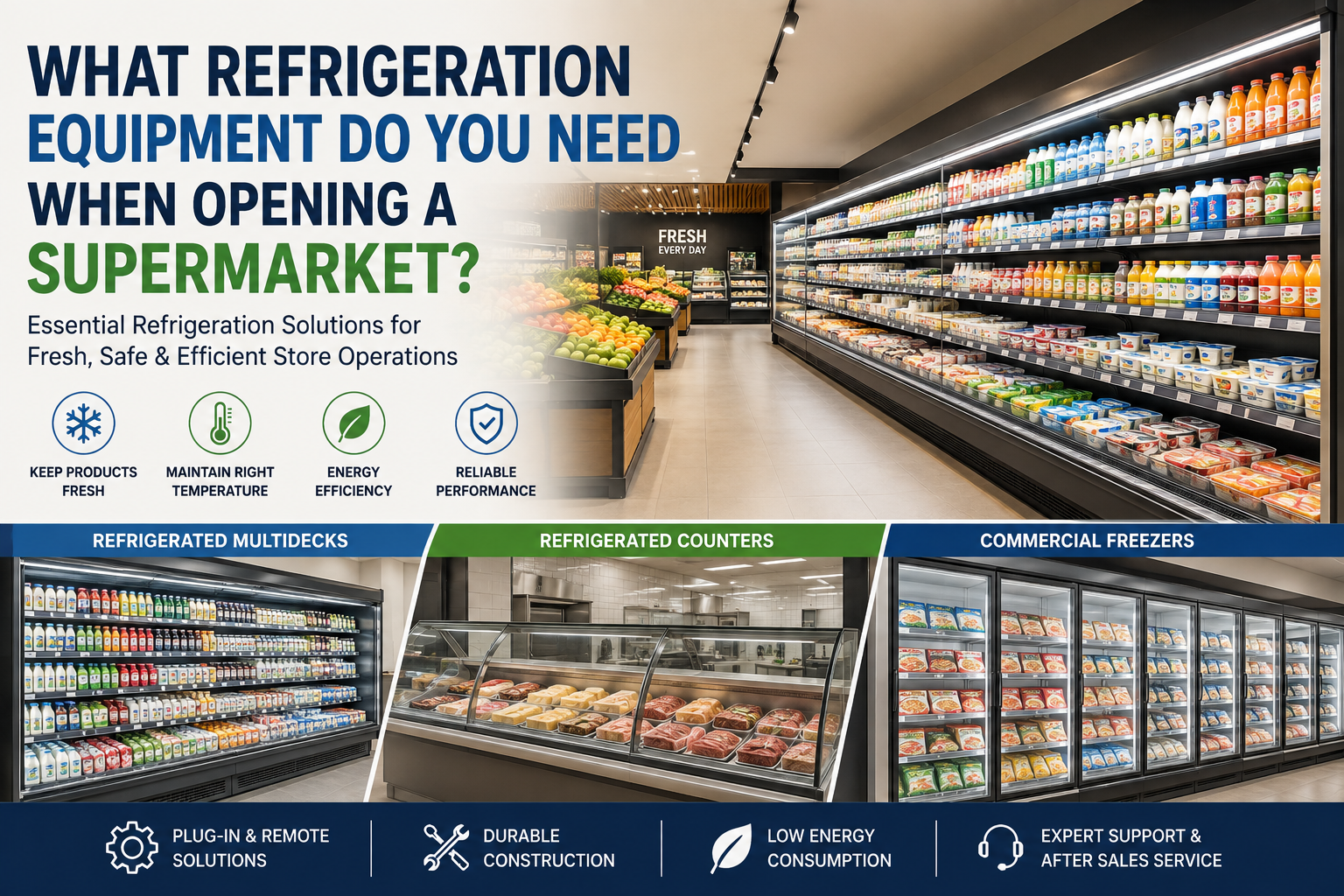
Refrigerated multidecks can provide substantial vertical display capacity, while counters and freezers serve different applications.
The objective is to select the right cabinet for the product rather than using one oversized solution for every department.
16. Consider Remote Refrigeration for Larger Projects
For larger supermarkets, remote refrigeration can be considered as part of a centralized refrigeration strategy.
With remote refrigeration, multiple display cabinets can connect to an external refrigeration system.
This can provide a more centralized approach to managing refrigeration across a larger store.
However, energy performance depends on the design of the complete system. A remote system should be properly sized and designed according to the number of cabinets, product requirements, store conditions, and operating demands.
For more information, see our guide to remote refrigerated display cabinets.
17. Use Plug-In Refrigeration Where It Makes Sense
Plug-in refrigeration can also be a practical option for certain applications.
Because the refrigeration system is integrated into the cabinet, plug-in equipment can provide self-contained refrigeration without requiring connection to a central external refrigeration system.
This can be useful for individual cabinets, smaller stores, or specific areas within a retail environment.
As with remote refrigeration, energy performance depends on the equipment design, operating conditions, maintenance, and correct application.
18. Train Employees
Energy efficiency is not only an equipment issue.
Employees interact with refrigeration equipment throughout the day.
Simple training can help prevent unnecessary energy consumption.
Staff should understand:
- Correct product loading
- Maximum loading lines
- Proper door closing
- Cleaning procedures
- Temperature requirements
- What to do when equipment behaves unusually
- When to report maintenance problems
Good daily habits can support the efficiency of the refrigeration system.
19. Plan Refrigeration Before Opening a New Supermarket
If you are opening a new supermarket, refrigeration should be considered during the store planning stage.
Do not wait until shelves and aisles are already installed.
Consider:
- Product categories
- Cabinet locations
- Customer movement
- Electrical requirements
- Refrigeration infrastructure
- Technical space
- Maintenance access
- Future expansion
- Energy performance
Early planning can make it easier to choose suitable equipment and avoid unnecessary changes later.
20. Look at Total Operating Cost, Not Just Purchase Price
The cheapest refrigeration cabinet is not necessarily the most economical choice in the long term.
When comparing equipment, consider:
Purchase price + installation + energy consumption + maintenance + repairs
A cabinet with a higher initial cost may provide better long-term value if it offers appropriate performance, durability, energy efficiency, and maintenance support.
This is why refrigeration should be evaluated as a long-term business investment.
How Can a Supermarket Improve Refrigeration Efficiency?
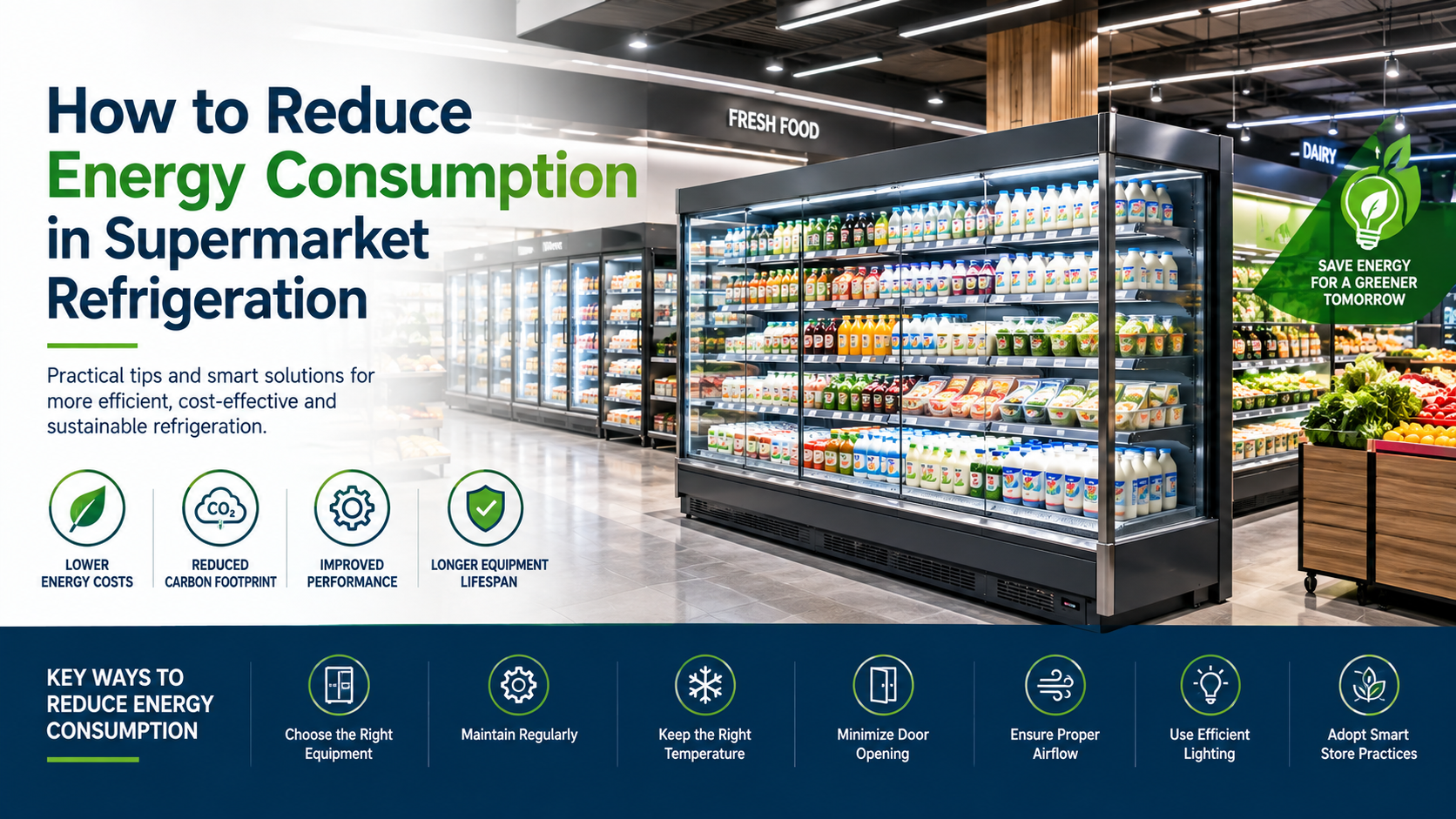
A practical energy-efficiency strategy can combine several measures:
- Choose equipment appropriate for the products.
- Select the right refrigeration system.
- Maintain correct product loading.
- Keep airflow areas clean.
- Check door seals regularly.
- Avoid unnecessary door opening.
- Maintain appropriate temperatures.
- Schedule preventive maintenance.
- Monitor refrigeration performance.
- Replace damaged components promptly.
- Keep the store environment suitable for refrigeration.
- Train employees in correct equipment use.
No single measure will necessarily produce the biggest improvement. The best results often come from combining good equipment selection with proper operation and maintenance.
Final Thoughts
Reducing energy consumption in supermarket refrigeration is not simply about buying the newest equipment.
Energy performance depends on the complete system and how it is operated.
Choosing the right refrigerated display cabinets, maintaining proper airflow, avoiding overloading, checking door seals, maintaining appropriate temperatures, keeping equipment clean, and carrying out preventive maintenance can all contribute to more efficient refrigeration.
For larger supermarkets, the choice between remote and plug-in refrigeration should also be considered during the planning stage.
The most effective approach is to look at the entire refrigeration system—from equipment selection and store layout to daily operation and maintenance.
By treating refrigeration as a long-term investment rather than simply another store fixture, supermarkets can work toward reliable product cooling while controlling unnecessary energy consumption and operating costs.