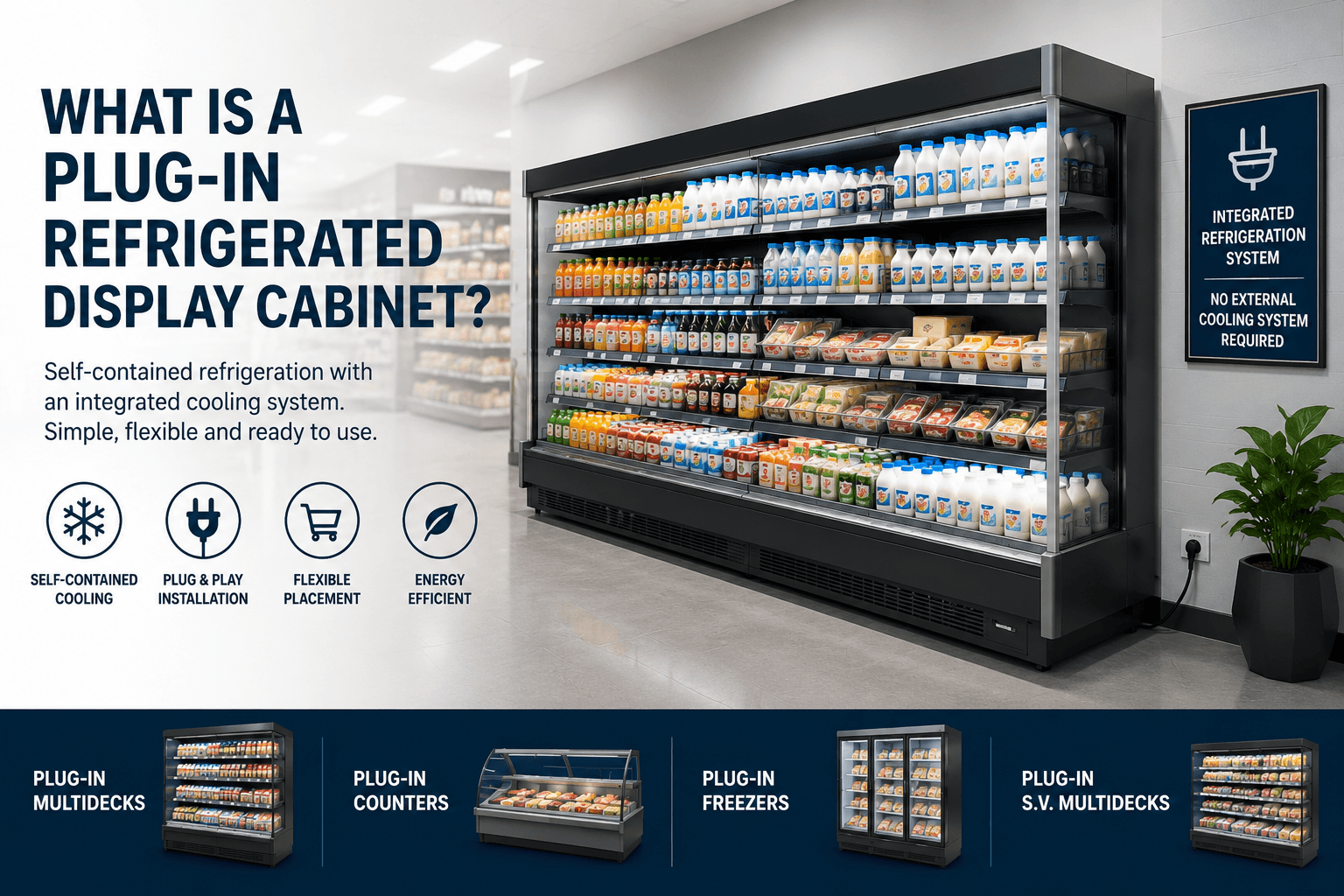
When choosing commercial refrigeration equipment for a supermarket, grocery store, convenience store, or other food retail business, you may come across two common options: plug-in and remote refrigerated cabinets.
But what exactly is a plug-in refrigerated display cabinet, and how does it work?
A plug-in refrigerated display cabinet has its own integrated refrigeration system. Unlike remote refrigeration equipment, it does not normally require connection to a separate external refrigeration system.
This makes plug-in refrigeration a practical option for many retail applications, particularly when businesses need self-contained refrigeration equipment that can be installed and operated independently.
In this guide, we explain what plug-in refrigeration is, how it works, its main benefits, the different types available, and what you should consider before choosing a plug-in refrigerated cabinet.
Table of Contents
What Is a Plug-In Refrigerated Display Cabinet?
A plug-in refrigerated display cabinet is a commercial refrigeration unit with its own built-in cooling system.
The refrigeration components are integrated into the cabinet, allowing the equipment to provide cooling without being connected to a separate central refrigeration system.
Plug-in refrigerated cabinets can be used in a variety of commercial environments, including:
- Supermarkets
- Grocery stores
- Convenience stores
- Food markets
- Retail stores
- Small and medium-sized commercial food businesses
The exact cabinet type depends on the products being displayed, available space, required temperature, and store layout.
How Does a Plug-In Refrigerator Work?
The basic principle of a plug-in refrigerated cabinet is relatively straightforward.
The cabinet contains its own refrigeration components, which remove heat from the refrigerated space and maintain the required temperature.
The general process includes:
- The refrigeration system removes heat from inside the cabinet.
- The refrigerant circulates through the refrigeration circuit.
- The evaporator absorbs heat from the refrigerated area.
- The condenser releases the removed heat.
- The cabinet maintains the appropriate temperature for the products being stored or displayed.
Because the refrigeration system is integrated into the cabinet, the unit can operate independently without requiring connection to a separate central refrigeration system.
Plug-In vs. Remote Refrigeration
The biggest difference between plug-in and remote refrigeration is the location of the refrigeration system.
Plug-In Refrigeration
With a plug-in cabinet:
- The refrigeration system is integrated into the cabinet.
- The cabinet operates as a self-contained unit.
- It does not normally require connection to an external refrigeration system.
- Installation can be simpler for suitable applications.
- Individual cabinets can operate independently.
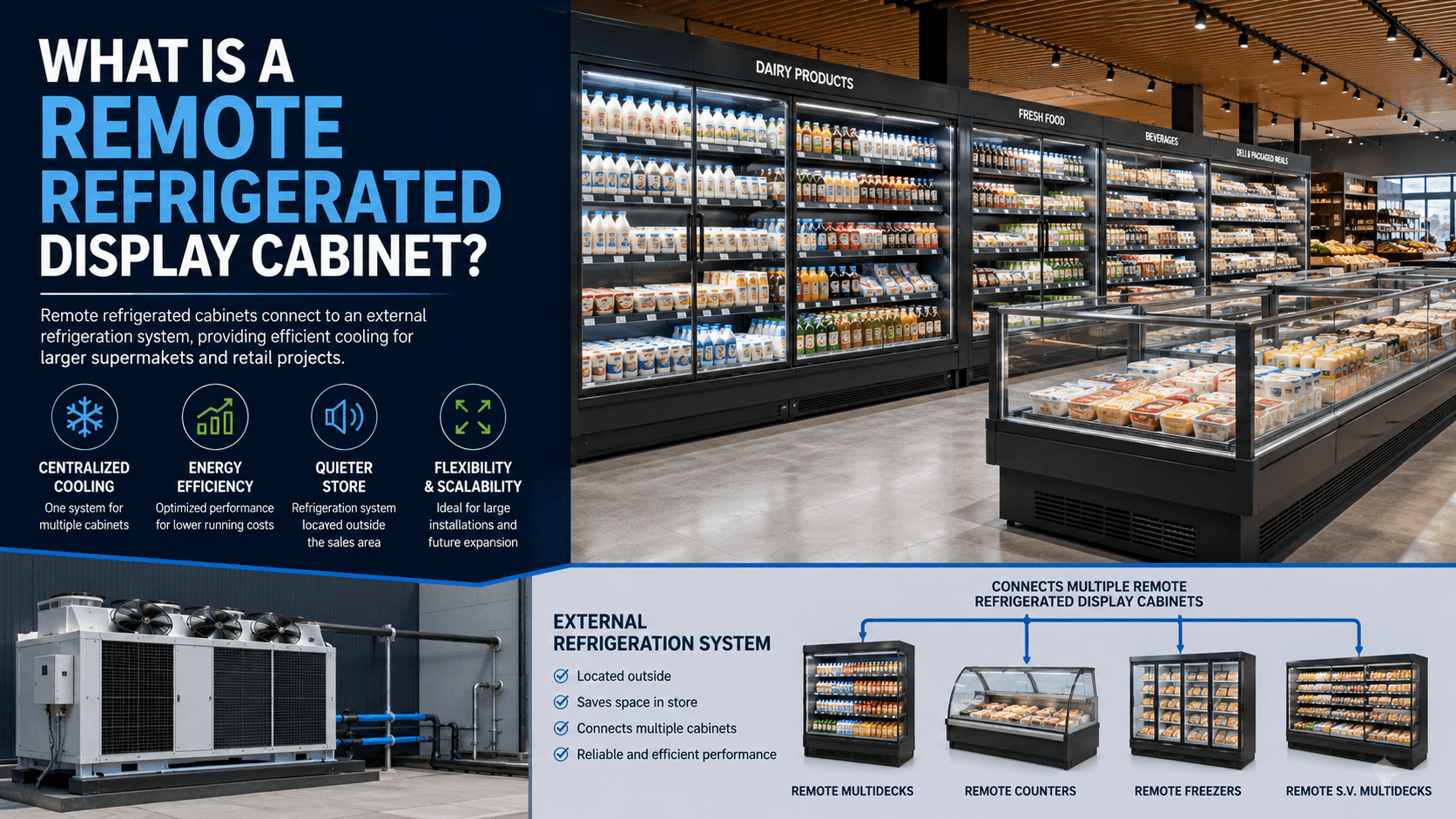
Remote Refrigeration
With a remote cabinet:
- The refrigeration system is located separately from the cabinet.
- The cabinet connects to an external refrigeration system.
- Multiple cabinets can be integrated into a larger refrigeration infrastructure.
- It can be particularly suitable for larger supermarket and hypermarket projects.
If you want to learn more about how remote refrigerated display cabinets work, their benefits, and when they are suitable for commercial applications, read our detailed guide.
Neither system is automatically better than the other.
The right choice depends on your store size, number of cabinets, available infrastructure, installation requirements, product range, and long-term refrigeration plans.
What Are the Advantages of Plug-In Refrigerated Cabinets?
Plug-in refrigeration offers several practical benefits for businesses that need self-contained commercial refrigeration equipment.
1. Self-Contained Refrigeration
One of the biggest advantages is that the refrigeration system is integrated into the cabinet.
This means the cabinet does not normally need to be connected to a separate central refrigeration system.
For businesses that require individual refrigeration units, this can make the planning process more straightforward.
2. Simpler Installation for Suitable Applications
Because the cooling system is built into the cabinet, plug-in equipment can have fewer external refrigeration infrastructure requirements than a remote system.
The exact installation requirements still depend on the equipment and project, but the self-contained design can be convenient for many retail applications.
3. Flexible Placement
Plug-in cabinets can provide flexibility when arranging refrigeration equipment within a store.
Businesses can select individual units according to their product categories and available space.
This can be particularly useful when refrigeration requirements are limited to specific areas of the store.
4. Independent Operation
Each plug-in cabinet has its own refrigeration system.
This means different cabinets can operate independently according to their individual requirements.
For smaller stores or businesses that do not need a centralized refrigeration system, this can be a practical approach.
5. Suitable for Different Retail Applications
Plug-in refrigeration is available in several cabinet configurations, allowing businesses to select equipment according to their products and store layout.
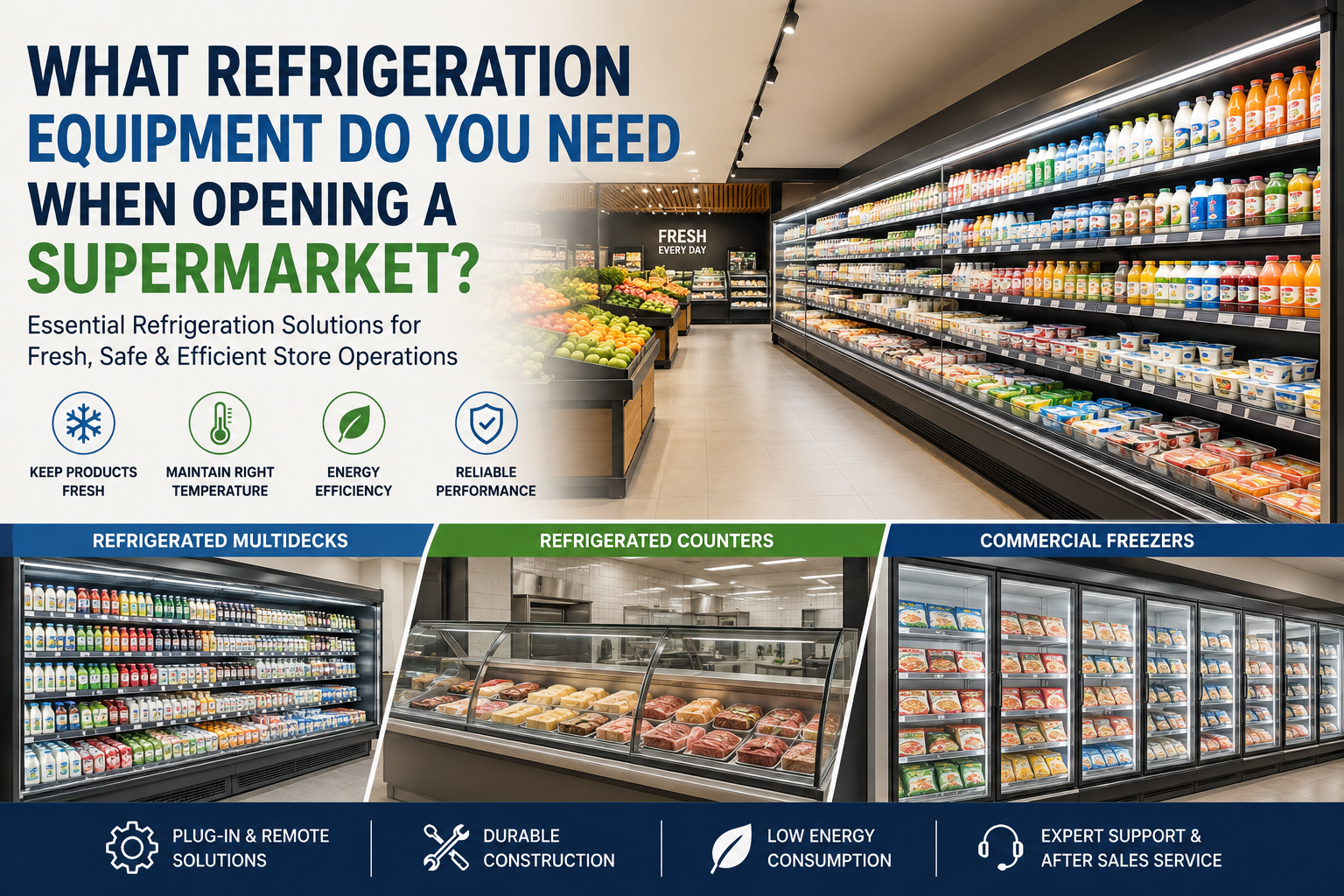
Common options include multidecks, counters, freezers, and S.V. multidecks.
What Types of Plug-In Refrigerated Cabinets Are Available?
Plug-in refrigeration is not limited to one cabinet design.
The right equipment depends on what you are selling and how you want to display it.
Plug-In Refrigerated Multidecks
Plug-in multidecks provide vertical refrigerated display space and can be suitable for supermarkets, grocery stores, and other retail environments.
They can be used for products such as:
- Dairy products
- Chilled beverages
- Packaged foods
- Fresh products
- Ready-to-eat foods
Their vertical layout allows businesses to display multiple product levels while making products easy for customers to see and access.
For businesses looking for this type of equipment, plug-in refrigerated multidecks are an important option to consider.
Plug-In Refrigerated Counters
Refrigerated counters can combine refrigerated storage with a practical counter-style configuration.
They can be useful in food retail environments where staff require convenient access to refrigerated products or where a counter configuration works better with the store layout.
Plug-in refrigerated counters can be considered when a self-contained refrigeration solution is preferred.
Plug-In Refrigerated Freezers
If your business sells frozen foods, you will need refrigeration equipment specifically designed for frozen products.
Plug-in freezers have an integrated refrigeration system and can provide a practical solution for businesses that need individual freezer units.
They can be used for products such as:
- Frozen vegetables
- Frozen meals
- Ice cream
- Frozen meat
- Other frozen foods
The equipment should always be selected according to the required temperature range and product specifications.
Plug-In S.V. Multidecks
S.V. multidecks provide another configuration for commercial refrigeration applications.
They can be considered when the store layout, product range, and display requirements call for a specific multideck design.
The best configuration depends on the individual project and the products that need to be displayed.
When Should You Choose a Plug-In Refrigerated Cabinet?
Plug-in refrigeration can be a suitable option when you need self-contained refrigeration equipment without connecting each cabinet to a central refrigeration system.
It may be worth considering when:
- You are opening a small or medium-sized store.
- You need individual refrigerated cabinets.
- A central refrigeration system is not available.
- You want flexibility in cabinet placement.
- You need refrigeration for specific areas of a store.
- You want different cabinet types for different products.
- You are adding refrigeration equipment to an existing store.
For larger supermarkets with many refrigeration cabinets, however, a remote system may also be worth considering.
The decision should be based on the complete refrigeration project rather than cabinet type alone.
Is Plug-In Refrigeration Suitable for Supermarkets?
Yes, plug-in refrigeration can be used in supermarkets, but suitability depends on the size and requirements of the project.
A supermarket with a limited number of refrigerated cabinets may find plug-in equipment convenient because each cabinet has its own cooling system.
Larger supermarkets with many refrigerated cabinets may instead consider remote refrigeration as part of a centralized system.
Before making a decision, consider:
- Number of refrigerated cabinets
- Store size
- Available technical space
- Product categories
- Required temperature ranges
- Energy consumption
- Installation requirements
- Maintenance
- Future expansion
What Products Can Be Displayed in Plug-In Refrigerated Cabinets?
The products that can be displayed depend on the specific cabinet and its temperature range.
Depending on the equipment, plug-in refrigeration can be used for products such as:
- Dairy products
- Beverages
- Packaged chilled foods
- Fresh food
- Ready-to-eat products
- Frozen foods
- Ice cream
Always check the manufacturer’s specifications before using a cabinet for a particular product category.
A chilled display cabinet should not automatically be used for frozen products unless it is specifically designed for that application.
How Energy Efficient Are Plug-In Refrigerated Cabinets?
Energy efficiency is an important consideration because commercial refrigeration equipment may operate for long periods every day.
When comparing plug-in cabinets, consider more than the purchase price.
Look at:
- Refrigeration component efficiency
- Cabinet insulation
- Glass and door design
- Lighting
- Temperature control
- Defrost system
- Operating conditions
- Expected daily usage
The efficiency of a cabinet depends on its design, components, operating conditions, and maintenance.
A properly selected and maintained cabinet can help businesses manage long-term operating costs.
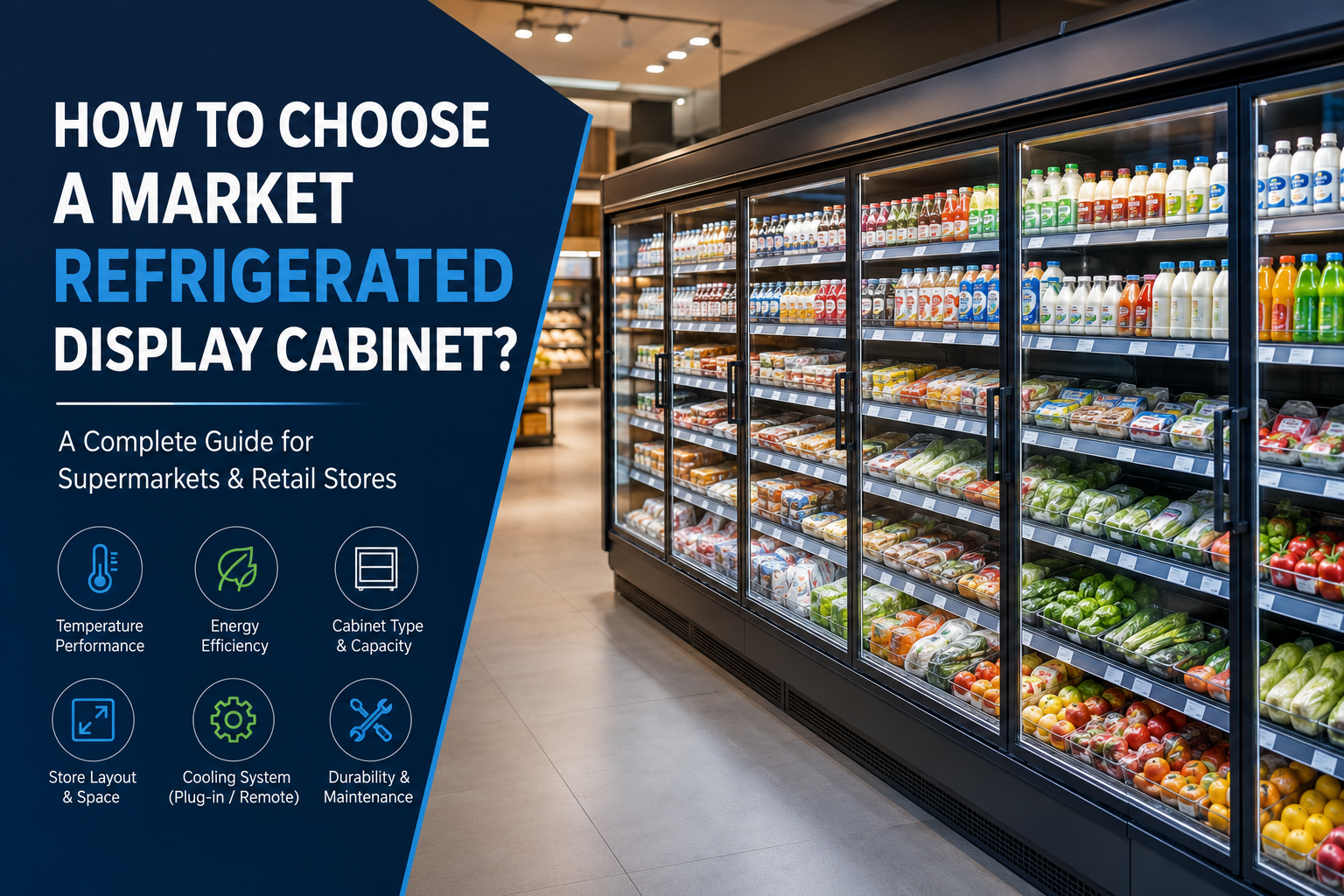
What Should You Consider Before Buying a Plug-In Refrigerator?
Before purchasing a plug-in refrigerated display cabinet, consider the following factors.
Product Type
Identify exactly what you will store or display and determine the required temperature range.
Cabinet Size
Measure the available space and determine how much display capacity you need.
Display Configuration
Choose between multidecks, counters, freezers, or other configurations according to your products and store layout.
Energy Consumption
Consider the expected operating cost rather than looking only at the initial purchase price.
Temperature Performance
Make sure the cabinet is designed for the temperature conditions required by your products.
Maintenance
Ask about cleaning, servicing, spare parts, and technical support before purchasing.
Store Environment
Consider ambient temperature, ventilation, customer traffic, and the location where the cabinet will operate.
Future Requirements
If your business is expected to grow, think about whether additional refrigeration equipment may be required later.
Plug-In Refrigeration for Small vs. Large Stores
The size of your business can influence the type of refrigeration system you choose.
Small Stores
Plug-in equipment can be particularly convenient for smaller stores that need a limited number of refrigerated cabinets.
Because each cabinet has its own refrigeration system, the business can choose individual units according to its specific needs.
Medium-Sized Stores
Medium-sized stores can also use a combination of plug-in equipment depending on their product range, layout, and refrigeration requirements.
For example, a store might use plug-in multidecks for chilled products and plug-in freezers for frozen goods.
Large Supermarkets
Large supermarkets may require a more extensive refrigeration infrastructure.
When many cabinets are needed, remote refrigeration can become an important alternative because multiple cabinets can be connected to an external refrigeration system.
This does not mean plug-in equipment cannot be used in large stores. The right choice depends on the project’s design and requirements.
Why Choose an Experienced Refrigeration Manufacturer?
Commercial refrigeration equipment is a long-term investment, so choosing an experienced manufacturer is important.
A reliable manufacturer can help you understand the differences between cabinet types, choose suitable equipment, and plan the refrigeration solution according to your application.
İnanç Teknik manufactures both plug-in and remote refrigeration equipment, including multidecks, freezers, counters, and S.V. multidecks.
The company also highlights its in-house manufacturing capabilities, including evaporator production, glass door and frame manufacturing, and powder coating technology.
For a new retail project, discussing your requirements with the manufacturer before selecting equipment can help you choose a solution that matches your products, store layout, and refrigeration needs.
Plug-In vs. Remote Refrigeration: Quick Comparison
| Feature | Plug-In Refrigeration | Remote Refrigeration |
|---|---|---|
| Refrigeration system | Integrated | External |
| External refrigeration connection | Normally not required | Required |
| Individual operation | Yes | Part of external system |
| Installation | Generally simpler for suitable applications | Requires refrigeration infrastructure |
| Cabinet flexibility | High | High within planned system |
| Smaller stores | Often suitable | May be unnecessary depending on project |
| Large supermarket projects | Can be used depending on design | Often considered for larger installations |
| Centralized refrigeration | No | Yes |
| Future expansion | Depends on individual units | Can be planned into system infrastructure |
Final Thoughts
A plug-in refrigerated display cabinet is a commercial refrigeration unit with its own integrated cooling system. It can be a practical solution for supermarkets, grocery stores, convenience stores, and other businesses that need self-contained refrigeration equipment.
The main advantages include independent operation, flexible placement, and reduced dependence on external refrigeration infrastructure. However, the right choice depends on your products, store size, available space, temperature requirements, energy goals, and future plans.
Before purchasing, compare the complete operating requirements rather than focusing only on cabinet price.
If you are planning a new supermarket or upgrading an existing store, an experienced commercial refrigeration manufacturer can help you determine whether plug-in or remote refrigeration is the better solution for your project.